Advanced cardiac point of care ultrasound (POCUS) illustrating tricuspid regurgitation.

Cardiac Point of Care Ultrasound (POCUS) Used to Diagnose Infective Endocarditis Following Multiple Negative Echocardiograms

Adriano Sanjuan; Daniel S Brenner; Heather Andrade; Alyson Bundy; Philip Clapham; Nathan Markus; Irina K Hariri; Edwin Jackson – We present a case of a 68-year-old African American man with a history of housing insecurity, chronic obstructive pulmonary disease, chronic hypoxic respiratory failure, heart failure with mildly reduced ejection fraction, chronic kidney disease, hypertension, opioid use disorder, schizophrenia, and mild mitral, tricuspid, and aortic valve insufficiency.

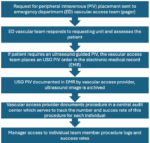
Health System Impact of Emergency Department-based Vascular Access Program in Patients with Difficult Intravenous Access

Nathan P. Roll; Shilpa Raju; Micah Ownbey; Jamal Jones; Christy Hopkins; Jennifer Cotton – We describe the impact of an Emergency Department (ED) based vascular access program with a specialized team of paramedics and emergency medical technicians (EMTs). This team is trained in USG PIV access to assist with patients that have difficult intravenous access (DIVA) both in the ED and throughout the academic medical center.

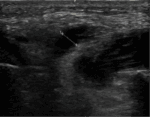
Grayscale POCUS images of a 25-year-old female standardized patient showing (A) sagittal view with a linear, hyperechoic structure within the lumen of the abdominal aorta and (B) transverse view with a normal, anechoic lumen of the abdominal aorta.

A Point of Care Ultrasound (POCUS) Artifact Mimicking an Aortic Dissection: A Case Series

Olivia Klee; Julia Buechler; Molly Fears; Caroline Gosser; Kahra Nix – In this case series, we describe an artifact that mimics a dissection involving the abdominal aorta that was found on a young, healthy, thin female medical student who was acting as a standardized patient. A radiology-performed ultrasound of her abdomen confirmed the abdominal aorta as normal. This same artifact was subsequently seen on three additional young, healthy, thin, female medical students.

Parotid Sialolithiasis Diagnosed on Point of Care Ultrasound (POCUS)

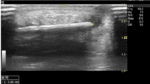
Heather Lystad; Elaine Yu; Rachna Subramony – A 58-year-old woman with a past medical history of irritable bowel syndrome presented to the emergency department due to gradual swelling and pain on the left side of her face for three weeks. She also reported feeling a lump on her inner cheek. The patient experienced worsened swelling, pain with opening her mouth, and shooting pains on the left side of her face. She denied any fevers or chills.

You’ve Gotten Under my Skin: How to Make a Simple, Non-Perishable, Low-Cost Soft Tissue Infection Ultrasound Simulator

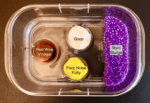
John Barrett; Christy Moore; Jeffrey A. Kramer; Nova Panebianco – We describe how to make an ultrasound compatible, low-cost, non-perishable, durable skin and soft tissue infection (SSTI) phantom model that simulates multiple pathologies including abscess and necrotizing fasciitis. The SSTI simulator has an extended shelf-life, can be recreated, and can serve as a needle aspiration simulator.

Man with Abdominal Bloating, Weight Loss

Sara Greenwald; Mario Ramos; Brian Kohen – In this case file, we describe a 69-year-old man presenting with nausea, vomiting, left upper quadrant abdominal pain and recent weight loss who had findings concerning for intussusception on POCUS. This led the emergency provider to order computed tomography (CT) which confirmed the diagnosis.

Point of Care Ultrasound (POCUS) Used to Rapidly Diagnose Both Renal Colic and a Symptomatic Abdominal  Aortic Aneurysm in an Elderly Man with Left Flank Pain

Rie Seu; Ariella Gartenberg; Rachel Mirsky; Aamir Bandagi; Nicole J. Leonard-Shiu; Reema Panjwani; Nora McNulty ;Trevor Dixon; Michelle A. Montenegro ; Michael Halperin – A 70-year-old man with a history of tobacco use, hypertension, nephrolithiasis, chronic systolic heart failure, and recent diagnosis of a 5 cm infrarenal AAA one-month prior presented to the emergency department (ED) with acute onset left flank and lower back pain for two weeks

The Prevalence of Systemic Venous Congestion Post Kidney Transplant Detected by Point of Care Ultrasound (POCUS)

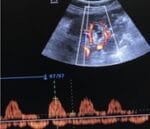
Santiago Beltramino; Agustín Manchado Bruno; Damián Fernández; Javier Walther; Gustavo Werber – Systemic venous congestion is a known cause of acute kidney injury (AKI), but its presence in kidney transplant patients has not been previously described in the literature. The objective of this study was to determine the prevalence of systemic venous congestion in recent kidney transplant recipients. We conducted a prospective, longitudinal, descriptive study including 30 adult patients during the first week post-renal transplant at the Instituto de Trasplante y Alta Complejidad in Buenos Aires, Argentina.